
Ceiling Fan Installation in Frankston
Whether there’s wiring up there already or the ceiling has never had anything in it, we’ll sort it. Fixed price agreed before anyone gets on a ladder.
- 4.9 Google Rating
- Licensed & insured
- Straight swaps Often same week
- Supply your own fan No problem
- Certificates COES where prescribed
Ceiling fans are a simple upgrade, until there's no wiring where you need it
Replacing an existing ceiling fan is usually simple. Installing one where there’s currently only a light, or no ceiling point at all, can mean new cabling, switching and a proper fan-rated mounting point.
We install ceiling fans across Frankston and the south-east, including bedrooms, living areas, alfresco spaces and high or raked ceilings. You can supply your own fan or we can help you pick the right option for the room.
We also install bathroom exhaust fans, including proper ducting to move moisture outside rather than into the roof cavity.
What's in a ceiling fan installation
-
Isolation
We isolate the circuit and test that it's safe before any work begins.
-
Mounting
A fan-rated mounting block fixed to a joist, not the standard bracket a light sits on.
-
Cabling & switching
A second switch drop for independent wall control, or a remote receiver where new cable would mean opening the ceiling.
-
Balancing
Blades balanced so the fan doesn't wobble at speed, then the circuit tested and the RCD verified.
-
Clearance check
At least 2.1 metres from floor to blade tips, which in a 2.4 metre ceiling means a low-profile fan.
-
Clean-up
Drop sheets down, packaging taken with us, floor vacuumed before we leave.
Rooms we fit fans in most
Different rooms want different fans. Here’s what we’d usually recommend and why.
-
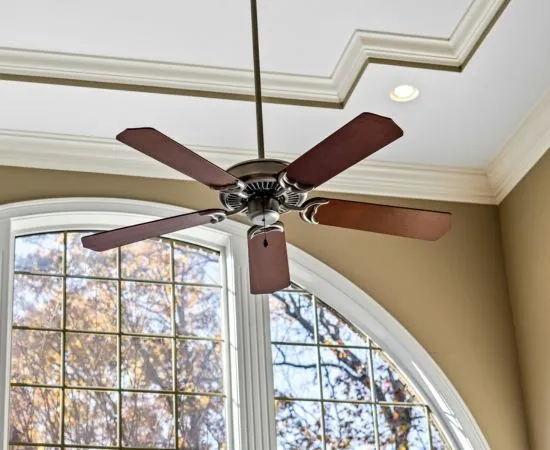
Bedrooms
The most common request by a distance, and the room where noise matters most.
- DC motor recommended, near silent and far lower running cost
- 48 inch blade span suits a standard bedroom
- Remote or wall control rather than a pull cord
- Reverse function for winter circulation
-
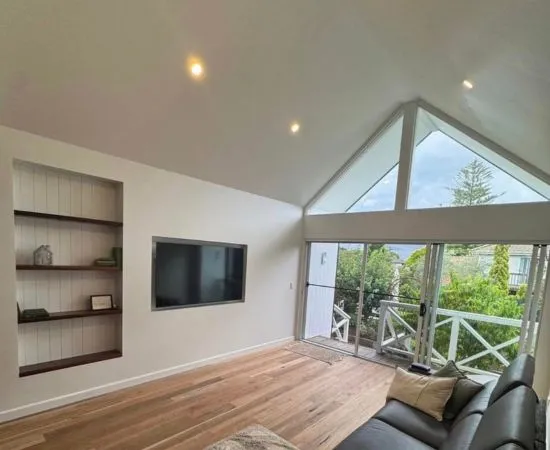
Living & open plan
Bigger volumes where one large fan often works less well than two smaller ones.
- Two fans zoned separately across an open plan space
- Blade span matched to the size of the room
- Fitted alongside downlights while the ceiling is open
- Wall control grouped with the existing light switches
-
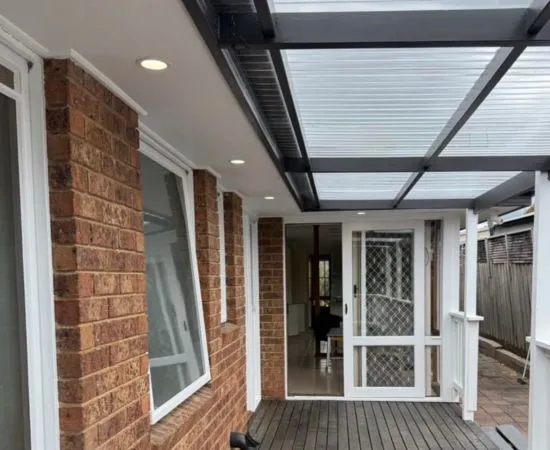
Alfresco & outdoor
Anything under a patio or carport, where salt air will find a fan that isn’t rated for it.
- Outdoor-rated units with sealed bearings
- Stainless or powder-coated fittings for coastal air
- IP-rated switching and weatherproof connections
- Fitted with the alfresco lighting in one visit
-
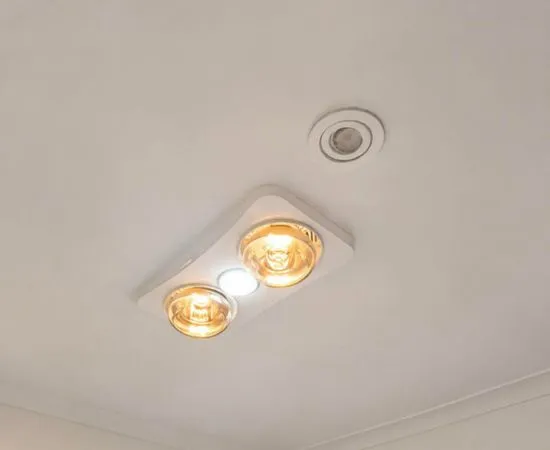
Bathrooms & laundries
Exhaust fan territory rather than ceiling fan, and a different job with different rules.
- Ducted to an eave or roof vent, never into the roof cavity
- Sized to the room rather than replacing like for like
- Timer or humidity sensor so it runs on after the shower
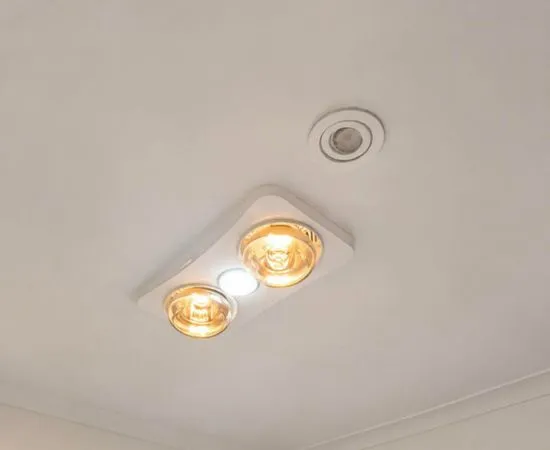
- Three-in-one heat and light units on their own circuit
-
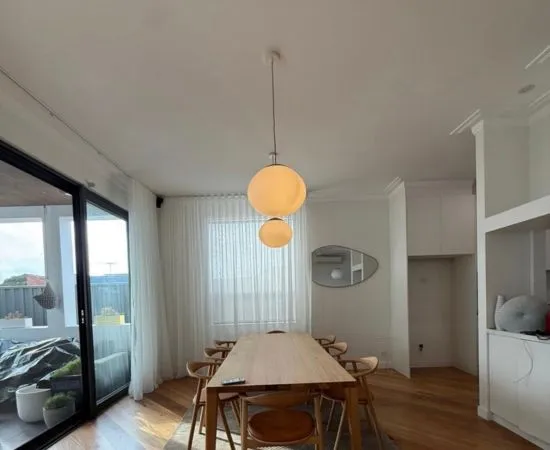
Nurseries & kids' rooms
Noise matters more here than anywhere else in the house, because the fan runs all night.
- DC motor so it runs close to silent on low
- Remote or wall switch rather than a pull cord
- Low-profile fitting for standard 2.4 metre ceilings
- Blades and mounting checked for balance before we leave
-
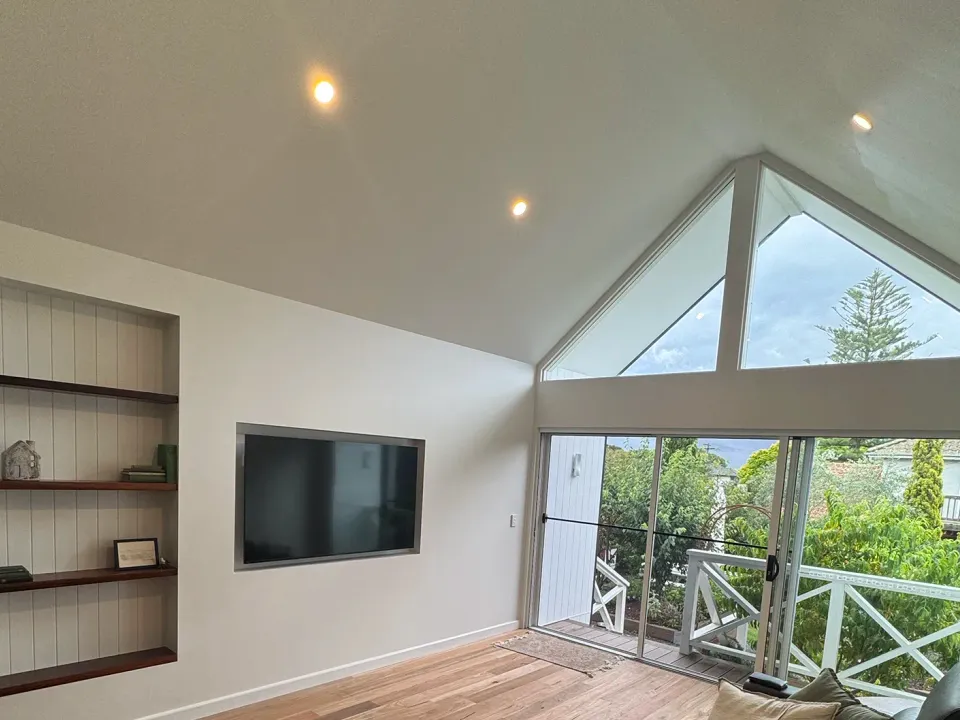
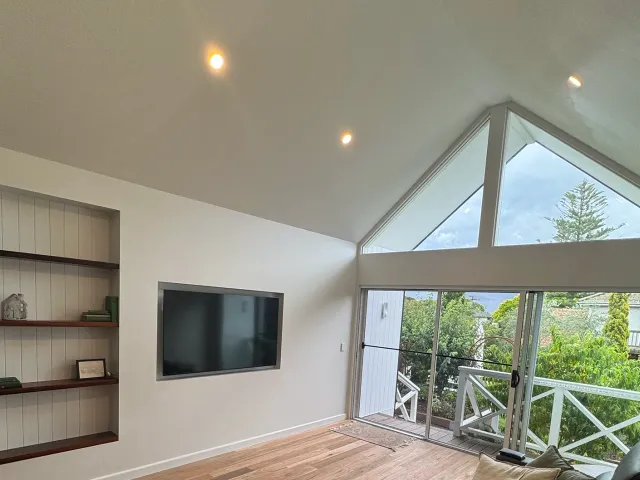
Raked & high ceilings
Cathedral, raked and two-storey voids, where the mounting is the whole job.
- Angled mounting kit matched to the ceiling pitch
- Downrod length sized to bring the blades to the right height
- Access and safe working arrangements sorted at quote stage
- Remote control, since a wall switch run is rarely practical
What we install to
Here’s what we include as standard, unless you’ve asked for something different.
- Clearance
- Minimum 2.1 metres from floor to blade tip
- Mounting
- Fan-rated block fixed to a joist, never to plasterboard
- Blade span
- Matched to the size of the room
- Motor type
- DC recommended for any room the fan runs overnight
- Outdoor units
- Outdoor-rated with sealed bearings under alfresco or carport
- Exhaust ducting
- Ducted to an eave or roof vent, never into the roof cavity
- Circuit protection
- RCD protection confirmed before we sign off
Signs the job is bigger than a straight swap
Not every fan install is a one-hour job, and we’d rather tell you at the quote than halfway through.
- There's no fan point in the room, only a light
- The existing mounting is a light bracket rather than a fan-rated block
- The ceiling is raked, cathedral or two-storey with no roof space above
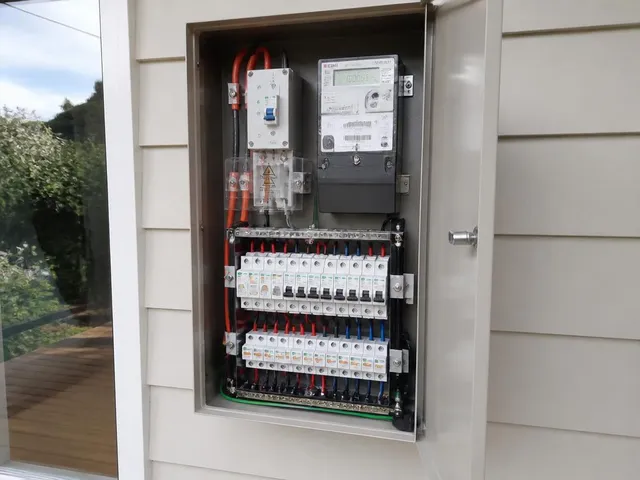
- The switchboard is ceramic-fuse with no spare ways, so a switchboard upgrade comes first
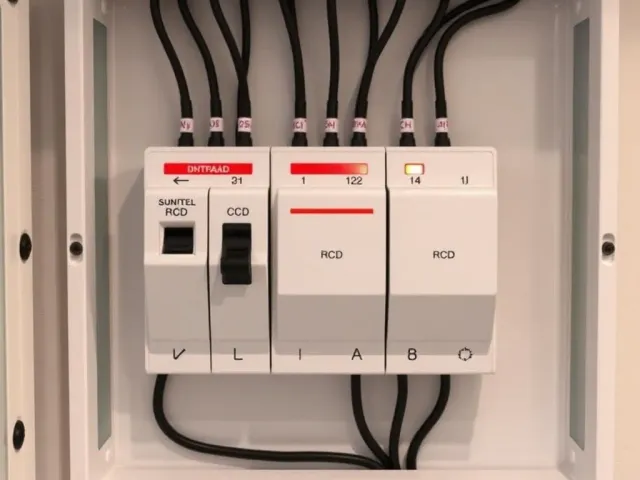
- The circuit has no RCD protection, which we'd fix with a safety switch installation
- The existing fan wobbles because the joist above it was never right
What's in scope
Included
- All labour, cable and mounting hardware
- Fan-rated mounting block fixed to a joist
- Blade balancing and full circuit testing
- RCD protection verified on the circuit
- Certificate of Electrical Safety where prescribed
- Drop sheets, vacuum and packaging taken away
Not included
- The fan itself, unless you've asked us to supply it
- Patching and painting where a ceiling has to be opened
- Switchboard work needed to make room for a new circuit
- Roof access equipment on ceilings above standard height
How the job runs
-
Step 1: Site visit
We come and see the ceiling and switchboard in person before quoting.
-
Step 2: Fixed quote
Everything itemised, so there’s no conversation about extras on site.
-
Step 3: We arrive
On the day we said, with drop sheets down before anything starts.
-
Step 4: Install & test
Mounted, balanced, circuit tested and the RCD verified.
-
Step 5: Clean-up
Floor vacuumed, packaging gone, warranty paperwork handed over.
Compliance, certificates and sign-off
Where the work is prescribed you get a Certificate of Electrical Safety issued in your name, which is what separates a licensed installation from an unlicensed one. We also check the circuit has working RCD protection before we sign off, because a fan is a very common excuse to find out that half the house doesn’t.
- Certificate of Electrical Safety issued in your name
- Circuit tested and RCD trip verified before handover
- Mounting confirmed as fan-rated and fixed to a joist
- Clearance to blade tips checked against the standard
- Exhaust ducting confirmed as venting outside the roof
- Manufacturer warranty paperwork handed to you on the day
Recent work
-
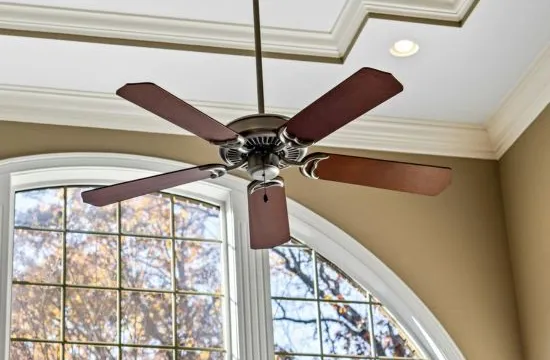
Bedroom fans · Langwarrin
-
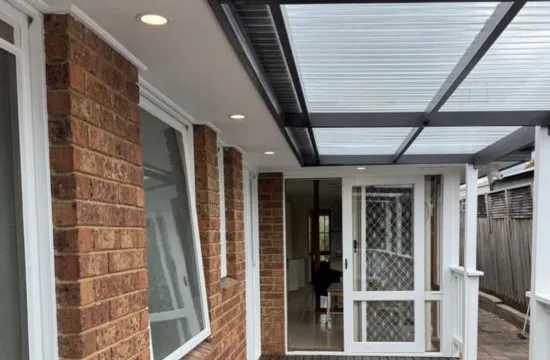
Alfresco fan · Mount Eliza
-
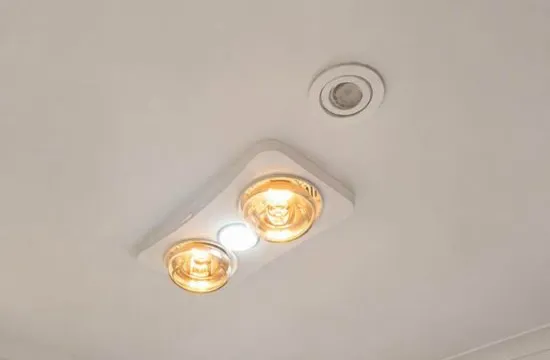
Bathroom exhaust · Seaford
-
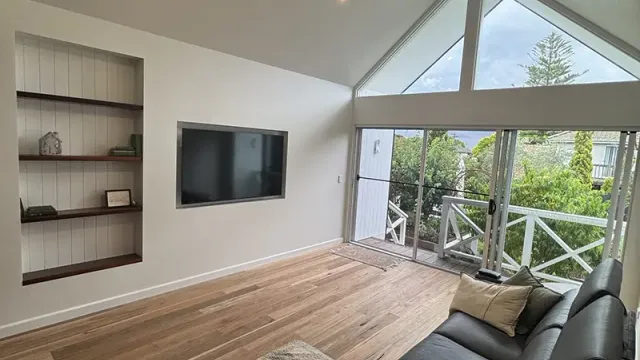
Raked ceiling install · Frankston South
Why choose Streamline
-
No mess left
Drop sheets down, floor vacuumed and packaging taken away with us.
-
Quoted in person
We look at the job face to face and give you a fixed price before we start.
-
Your fan or ours
Happy to install a fan you’ve bought, just send us the model first.
-
Told upfront
If it's a bigger job than a swap, you hear that at the quote, not on the day.
Ceiling and exhaust fan installation for Frankston homes
Streamline Electrical & Data is a Frankston-based team working across the Mornington Peninsula and south-east Melbourne. Fans are one of those jobs that tends to arrive with others attached, so it’s often worth grouping them.
Ceiling fans and exhaust fans are not the same job
People often ring asking for a fan in the bathroom, meaning an exhaust. The two get lumped together but they solve opposite problems. A ceiling fan moves air around a room so you feel cooler. An exhaust fan pulls damp air out entirely so you don’t end up with mould on the cornice. The part that catches people out is the ducting, because a surprising number of exhaust fans in older homes vent straight into the roof cavity, which just moves the moisture somewhere you can’t see it.
Fans in older homes and renovations
A lot of the housing through Seaford, Frankston North and Carrum Downs was wired long before anyone was hanging fans off ceilings. That usually means no fan point, a light circuit doing more than it should, and sometimes a board with no room left. We’ll let you know upfront if the existing wiring or switchboard means there’s more involved than simply installing the fan.
Fans and air conditioning together
Fans don’t cool air, they move it, which is exactly why they work well alongside a split system. Running a fan lets you sit the aircon a couple of degrees higher for the same comfort, and across a Melbourne summer that shows up on the bill. For bedrooms, a quieter DC fan is often worth considering, particularly if it will be running overnight.
Damp bathrooms and mould
If the mirror is still fogged twenty minutes after a shower, the exhaust fan is either undersized, blocked, or venting into the roof. It’s a common find and a cheap fix. We size the fan to the room rather than fitting whatever was there before, and we run the duct out to an eave or roof vent so the moisture actually leaves the house.